


.jpg)
When choosing a new system for your company, budget is often the deciding factor. In most cases, businesses face two options: a quick start with an off-the-shelf platform or an investment in a custom-built solution. The first option is attractive because of its low barrier to entry. You pay a subscription fee, log in, and can start working almost immediately. The second option naturally raises concerns about higher upfront costs.
But is what seems inexpensive today destined to become a costly trap tomorrow?
As a business owner or manager, you know that a poor technology decision can limit your company's growth for years. To understand the true cost of software, you need to look far beyond the first invoice.
Upfront costs vs. long-term investment
At first glance, off-the-shelf software appears to have a clear financial advantage. Vendors distribute development costs across thousands - or even millions - of customers, allowing them to offer low monthly subscription fees. It is similar to renting a fully furnished office. You can move in immediately, but the property will never belong to you, and the landlord can increase the rent whenever they choose.
Custom software, on the other hand, requires a significantly larger initial investment. This is because a team of experienced specialists analyzes your business processes and builds the system architecture from the ground up.
However, it is important to remember that developing custom software is actually the creation of a valuable business asset. The unique codebase, intellectual property rights, and independent data infrastructure can significantly increase your company’s valuation during audits, acquisitions, or investment rounds. More importantly, you become the sole owner of the technology and eliminate recurring licensing fees associated with third-party platforms.
Hidden costs of off-the-shelf software
Monthly subscriptions sound attractive - until your organization starts growing.
Suddenly, what appeared to be an affordable SaaS (Software as a Service) solution reveals a much more expensive reality. The advertised price is often just the tip of the iceberg.
Additional costs quickly begin to accumulate:
- Fees for every new user added to the platform.
- Transaction-based commissions.
- Paid plugins and extensions required for basic integrations.
- Premium features locked behind higher pricing tiers.
Over time, companies often encounter what can be described as a "scaling tax." Software vendors regularly adjust their pricing models, and because all your business-critical data resides within their ecosystem, you become dependent on their platform. Migrating away can be risky, time-consuming, and expensive, which means many organizations simply accept ongoing price increases.
When does a standard system stop being enough?
Off-the-shelf software inevitably forces compromises.
Because these systems are designed for a broad market, they cannot perfectly reflect your unique business processes. Technology experts often refer to the “80% rule”: if a standard solution does not naturally cover at least 80% of your requirements, it will likely become a burden over time.
Common warning signs that your software is limiting growth include:
- Inability to fully support specialized business processes, forcing teams to change efficient workflows.
- Rapidly increasing licensing costs as the company hires more employees.
- Dependence on an external vendor’s roadmap and product decisions.
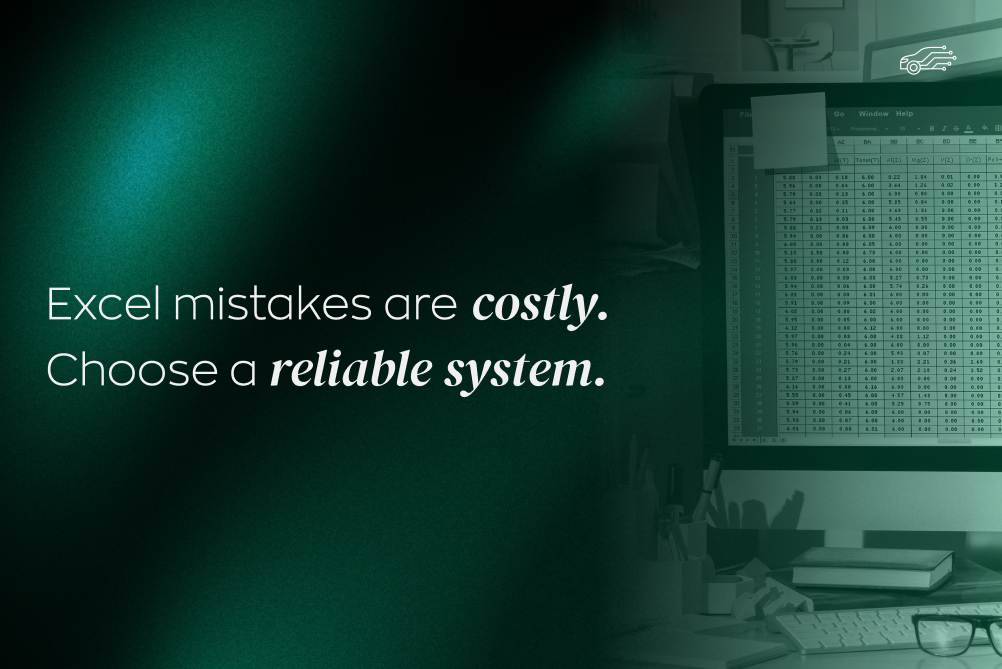
- The need for manual workarounds, spreadsheets, and repeated data entry across multiple systems.
When employees spend hours every week transferring information between disconnected platforms, hidden costs begin to accumulate. Lost productivity, increased risk of human error, and employee frustration can quickly outweigh the perceived savings of a low-cost subscription.
Return on investment (ROI) and total cost of ownership
A realistic view of software expenses only emerges when you evaluate the Total Cost of Ownership (TCO) over a period of three to five years.
Market data consistently shows that within just three years, a low-cost subscription-based system can end up costing more than building and maintaining a stable MVP version of a fully customized platform.
Although custom software requires a higher initial investment, it often delivers substantial returns. Studies frequently indicate that custom solutions can achieve ROI figures exceeding 160% within the first three years of use.
Several factors contribute to this return:
- Elimination of recurring licensing fees.
- Reduced operational costs through automation.
- Improved efficiency and productivity.
- Greater scalability without proportional cost increases.
Once the break-even point is reached, every additional employee using your platform typically adds little to no software cost. This is why strategic IT consulting plays such a crucial role in evaluating long-term savings before major investment decisions are made.
Which option is right for your business?
The choice between off-the-shelf software and a custom solution is about much more than a simple budget calculation. It is a strategic decision that shapes how your business will operate and compete in the future.
Ask yourself a fundamental question: do you want to adapt your ambitions to the limitations of someone else's platform, or do you want technology to adapt to your business goals?
If you are testing a new business model, working with a limited budget, or need a solution within a matter of weeks, an off-the-shelf platform is often the most practical and cost-effective choice.
However, if your focus is on sustainable growth, operational scalability, competitive differentiation, and long-term company value, custom software provides far greater opportunities. Technology ownership becomes a strategic advantage that no subscription package - regardless of its price - can offer.
Choose carefully. Software should not be viewed as a short-term expense, but as one of the most important investments in your company’s digital future.



.png)

.jpg)
.jpg)
.jpg)
.jpg)

.jpg)
.jpg)
.jpg)
.jpg)
.jpg)
.jpg)
.jpg)
.jpg)
.jpg)

.jpg)

.jpg)
.jpg)
.jpg)
.jpg)
.jpg)
.jpg)
.jpg)
.jpg)
.jpg)
.jpg)
.jpg)

.jpg)
.jpg)
.jpg)
.jpg)
.jpg)
.jpg)
.jpg)
.jpg)
.jpg)
.jpg)
.jpg)



.png)


.jpg)
.jpg)
.jpg)
.jpg)

.jpg)
.jpg)
.jpg)
.jpg)
.jpg)
.jpg)

.jpg)
.jpg)
.jpg)
.jpg)
.jpg)
.jpg)
.jpg)
.jpg)
.jpg)
.jpg)


.jpg)
.jpg)
.jpg)

.jpg)

.jpg)


.jpg)
.jpg)
.jpg)
.jpg)

.jpg)

.jpg)